
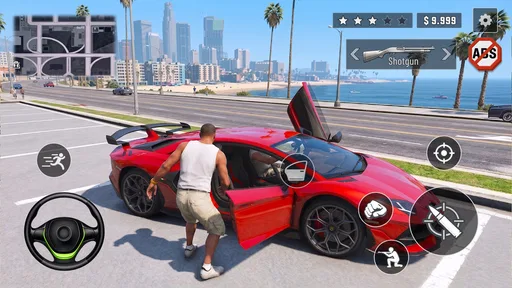
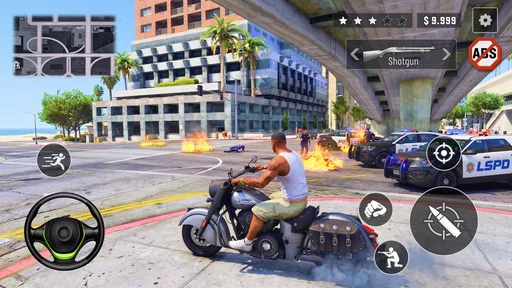
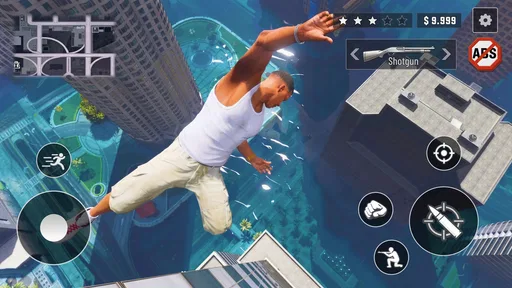
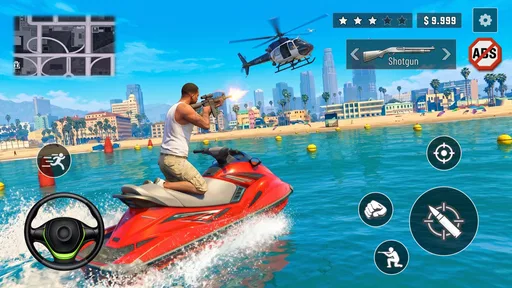
Gangster Miami RP: Grand City review
 Analysis by GetAllApps
I came to Gangster Miami RP: Grand City expecting a role-playing game built around the appeal of roaming a city and getting into action, rather than a tightly guided, story-first adventure. That distinction matters: its open-world premise sounds most appealing when you want room to set your own pace, but it also means the experience may be less satisfying if you need clear objectives and a steady stream of direction. My overall impression is that it is worth considering for casual city-action sessions, with a few sensible expectations about performance and focus.
What the open-city premise asks of you
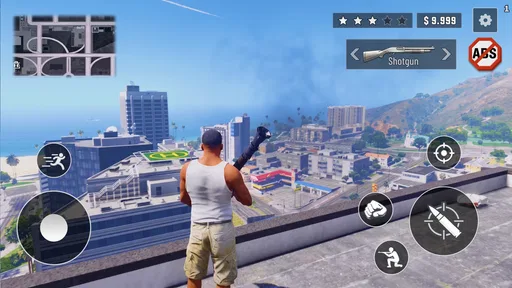
Universe Game Labs presents this as a role-playing game, and the Miami setting gives the idea a recognizable frame: a city to move through, with action and role-play as the draw. The short store description is simply “Gangster Miami RP,” so I would approach it as a broad premise, not a promise of a particular storyline or a specific set of mechanics. The key question is whether you enjoy making your own fun inside an open setting.
That open-ended quality can be a strength when I have a little spare time and want to explore rather than follow a long sequence of instructions. It can also be a weakness. Players who like clear mission markers, carefully paced character development, or a strong narrative thread may find a more structured role-playing game easier to settle into. Here, the city-action concept is the central appeal, so your enjoyment depends more on whether that style suits you.
I would treat the game as a flexible pick-up-and-play option rather than something that automatically provides a polished, guided tour of its world. That is a useful expectation to set before installing: open-world action can feel liberating when I am in the mood to wander, but aimless when I want the game to tell me exactly what to do next.
How quickly it fits into a spare moment
The premise is easy to understand, which helps with the first decision: this is for someone curious about city roaming and action, not someone searching for a quiet puzzle or a conventional fantasy quest. Still, an open setting can take longer to feel rewarding than a short, self-contained level. If I only have a few minutes, I would first see whether the game makes it easy to get moving and find something engaging, rather than assuming that the large-scale premise makes every brief session satisfying.
A realistic use case is a break between other tasks. I might open it to explore for a while, then stop when I need to return to work or study. That works best if I am comfortable pausing without feeling that I have interrupted a carefully scripted story. If I want every session to end with a clear accomplishment, a more mission-led game is likely the better fit.
For a first session, I would avoid judging the whole experience by a rushed launch or a few minutes of unfocused wandering. Give yourself enough time to understand the game’s rhythm, then decide whether the city keeps your attention. This is a practical way to distinguish “I need a little time to get oriented” from “this open-world style is not for me.”
What may feel demanding during longer play
Open-world action can put more sustained demands on a phone than a simple turn-based role-playing game, especially when play involves moving around a city for an extended stretch. That is a general expectation, not a claim about a particular frame rate or battery drain here. I would pay attention to how the game behaves on your own device during a longer session, rather than assuming that a brief launch test tells the whole story.
One useful habit is to check performance in stages: first see whether the game starts and responds comfortably, then play long enough to notice whether the device becomes warm or the experience changes. If either happens, taking a break and closing other demanding apps is a sensible first step. It will not fix every possible issue, but it helps separate a phone under general strain from a problem that appears only in this game.
Long sessions also make the game’s core trade-off clearer. The freedom of an open city is appealing when I want to explore, but it may not suit a low-battery commute or a moment when I cannot give the screen much attention. For those situations, a lightweight puzzle or a turn-based game is a more dependable companion. This one makes more sense when I can focus on the action and let a session run at its own pace.
Stability, recovery, and sensible expectations
I would not assume that every session will be identical across different phones or network conditions. The practical test is simple: does it start reliably on your device, remain responsive during the kind of play you want, and let you return after an interruption without too much hassle? Those are more useful questions than expecting a universal guarantee of smoothness.
If the app closes unexpectedly or becomes sluggish, I would try the ordinary recovery steps first: reopen it, make sure the device has breathing room, and avoid judging the game from one isolated hiccup. If the same trouble keeps happening, the issue may be a poor fit for that particular device or setup. I would not rely on it for a session that must continue uninterrupted until I have seen how it behaves in practice.
That advice is especially relevant if you often switch between apps. An open-world game may be less convenient than a quick, pause-friendly alternative when you are likely to answer messages, take calls, or move between tasks. I would start a session when I have a little uninterrupted time, then treat interruptions as a test of convenience rather than assuming progress or state will recover in a particular way.
Device fit, age suitability, and cost
The listed minimum operating-system requirement is Android 7.1, and the game is rated for Everyone. Those details make its basic compatibility and age classification easy to assess, but they do not tell me how comfortably it will run on every device that meets the minimum. A phone that can install a game is not necessarily the phone on which it feels best, so I would still check the experience directly before settling in for longer play.
It is free to download, with in-app purchases listed at $8.99 per item. That gives you a chance to try the core experience before spending money, which I prefer. I would begin without purchasing anything, see whether the exploration and action keep me engaged, and only consider an optional purchase if I already know I want more from the game. A price tag attached to an item is not, by itself, a reason to buy it.
The current version is 1.1.7, and the release date is June 22, 2026. The game has a 4.7 average from around 6,400 ratings, with 5 million-plus installs. Those figures suggest substantial interest, but they cannot tell you whether the style, device performance, or pace will suit you personally. I would use them as context, not as a substitute for trying the game on the phone you plan to use.
How it compares with other role-playing choices
Compared with a story-heavy role-playing game, the attraction here is the open-city action premise rather than the promise of a carefully directed plot. Compared with a compact arcade game, it asks for more willingness to explore and spend time in one setting. That makes it a middle-ground choice for players who want movement and role-play flavor, but do not necessarily want to commit to a long, linear campaign.
There are clear cases where I would choose something else. If I want turn-based combat that is easy to pause, a classic party-based RPG is a better fit. If I want a quick burst with a predictable endpoint, a level-based action game is likely more convenient. And if a strong narrative is my main reason for playing, I would prioritize a game that foregrounds its story rather than relying on an open-world premise to hold my attention.
Its best use is narrower but still worthwhile: a casual player who enjoys the idea of roaming a city and sampling action without needing every session to follow a fixed route. That is also why I would not recommend it simply because someone likes role-playing games in general. The open-world angle is the deciding factor.
Who I would recommend it to
I would suggest Gangster Miami RP: Grand City to someone who likes open settings, prefers to set their own pace, and is happy to test how an action-oriented game feels on their device. It is also a reasonable free starting point for curious players, since they can judge the central appeal before deciding whether any in-app purchase is worth considering.
I would steer away from it if you need guaranteed smooth performance on an older or easily strained phone, want a tightly guided story, or usually play in very short interruptions. Those preferences do not make the game bad; they simply point toward a different kind of experience. I would also avoid spending on an item before I have confirmed that the underlying game is something I will return to.
My verdict is that this is a promising choice for casual open-world action, provided you approach it with realistic expectations. Its strongest appeal is the freedom implied by a city-based role-playing setup; its main trade-off is that this freedom may feel less focused than a conventional mission-driven adventure. Try it in a session long enough to assess both the pacing and your phone’s response, then decide whether that mix earns a place in your regular rotation.
Pros and cons
Pros
- Open-world city gives players room to explore at their own pace.
- Role-playing lets players create their own criminal or civilian story.
- Vehicle options add variety to getting around the city.
- Character customization helps players stand out in multiplayer.
- The city setting offers a familiar crime-game atmosphere.
Cons
- Online play depends on a stable internet connection.
- New players may need time to understand the role-play rules.
- Progress can feel slow without regular play.
- Crowded servers may make interactions harder to follow.
- Combat-focused play may not suit players seeking peaceful role-play.


